Agile methods have their origins in software development. They emerged to meet new challenges, such as increasing (digital) competition, shorter product life cycles, rapidly changing customer requirements, and greater complexity.
The basic idea is: A project is defined to achieve a specific vision, for example, a new type of app for online banking. Unlike in the past, the first phase does not require a complete application specification, as with the waterfall model. Instead, the development steps of the new app are defined at short notice and implemented in short stages, the so-called sprints.
Therefore, an agile approach is understood to mean methods that do not require detailed planning of a project up to the intended end. This is done in light of the realization that the project’s environment, prerequisites, or goals often change during implementation, making the initial detailed planning obsolete.
Understanding agile as a philosophy is only the starting point — the real value emerges when teams put that philosophy into motion through structured yet flexible cycles of work. Each iteration is designed to surface new information quickly, allowing teams to course-correct before small misalignments become costly mistakes. The essence and phases of agile workflow provide a practical framework for how these cycles unfold, connecting the conceptual rejection of rigid upfront planning to the concrete rhythms of prioritization, delivery, and continuous improvement that define agile in action.
Agile approaches, on the other hand, focus on rapidly narrowing down the initial phase of the project, swiftly implementing it, extracting valuable insights from the experience, and employing this newfound knowledge to tackle subsequent stages of development with even greater efficiency. Examples of agile methods based on this idea are Scrum or Kanban.
Agile methods have revolutionized project management and product development in various fields, including healthcare and clinical research. The agile approach’s adaptability and focus on continuous improvement align well with the dynamic nature of clinical trials. For instance, incorporating epro systems into clinical trials allows for real-time patient feedback and streamlined data collection, enhancing the trial’s responsiveness and efficiency in adapting to patients’ needs and experiences.
Good for getting started: Kanban
Kanban is an agile method for self-organizing control of tasks in projects and processes. The flow of charges is continuously visualized via a Kanban board. The team processes the functions on the board according to the pull principle, i.e., it independently decides how and how much within a time unit.
Kanban is particularly suitable for solving simple tasks. And when it comes to improving an existing process or optimizing a value chain. Small self-sufficient teams can quickly learn, adapt and use Kanban. Therefore, Kanban can also be a suitable method for initially approaching the topic of agility with employees.
It is less suitable for complex projects and large, interdisciplinary teams. Rule of thumb: If the focus is primarily on optimizing the development result and not improving the process, Scrum is recommended.
Suitable for complex projects: Scrum
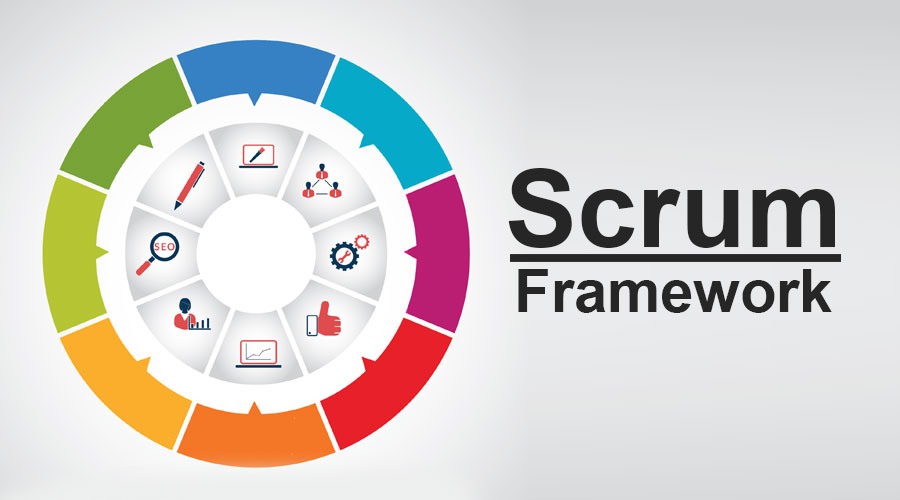
In our experience, clear role and task descriptions lead to increases in productivity and improvements in the quality of results. Scrum starts right there and provides for three dedicated roles: Scrum Master, Product Owner, and Development Team. They are defined as follows:
The interaction of these roles with each other is significant. In Scrum, the product owner is responsible for the “what.” He collects and prioritizes requirements in a so-called product backlog. In the sprint planning meeting, he presents these to the development team and a sprint goal. The development team is then responsible for the “how.” It estimates the effort involved in the individual requirements and independently determines which of the conditions it can implement.
During the sprint, the product owner supports the development team for further exchange. Finally, the Scrum Master is a constant process facilitator and coach. He ensures that the team can work optimally by identifying and removing obstacles. He also ensures that the defined procedure is followed. Especially for teams new to Scrum, this role is essential to ensure that the process is understood and internalized.
Characteristics of agile methods
To use agile methods successfully, the respective roles must be defined. The executive acts as a “servant leader,” and their success is measured by how much they improve teams. In concrete terms, the task is to develop and strengthen the necessary skills in the team. To increase productivity, the leader “protects” the team from outside influences and looks for ways to increase motivation in the team. The teams then work in an organized manner.
The right choice of project management tools
Agile project management approaches focus on the short-term, iterative realization of benefits instead of long-term schedules. This shifts the focus to product and requirements management, and new tools are required. Collaboration spaces are to be created to enable close cooperation in teams or with partners. The goals are then further defined, and the construction of the product backlog begins. This includes determining how long each iteration will take and how many iterations the company intends to commit to the project. The first development process starts if the backlog is sufficiently filled and prepared.
Technically, this can be done via MS SharePoint. All backlog items (epics, user stories, tasks, bugs, etc.) are collected and managed here. The advantage is that all backlog-relevant topics can be found precisely where the team works together in their collaboration space. The current sprint can then be displayed and managed using visualization tools such as our task board. Depending on the needs of the teams, other reports can also be created, and KPIs measured.
Angelica Berryhill is a renowned expert in Agile methodologies and a pivotal voice in the world of modern project management. With over a decade of experience in the industry, Angelica has carved out a niche as a thought leader, particularly in the application of Agile practices across diverse business sectors.